

ALL SEEING SENECA
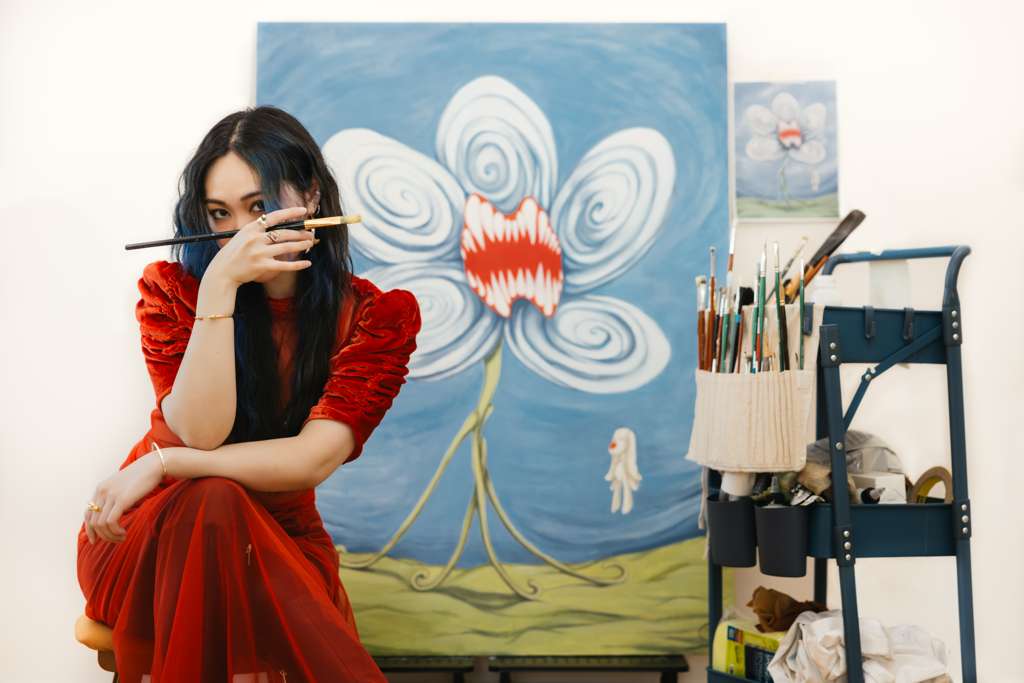
Presented at Art Basel Hong Kong 2026 by Asprey Studio at Booth Z4, All Seeing Seneca (b. 1994, New York) is a visual artist working across painting and digital media whose work blends animation, surreal storytelling and cinematic imagination.
Biography
All Seeing Seneca grew up in Shanghai, a quiet child immersed in daydreams and the culture of animation and fiction. Limited media exposure in China meant she often sought bootlegs of beloved classics, inspiring her to create her own original characters and stories. Seneca later studied at RISD and committed to a career in picture-making. Her practice developed commercial clients while her own paintings and illustrations garnered prestigious awards and international exhibitions, including The Armory Show and her first solo auction art series with Phillips.
Her most ambitious personal digital painting series, the 2,880-piece Perils of Sese, sold out in under ten minutes. Since then, she has continued storytelling through traditional painting, most recently with the Albertz Benda Gallery in New York. Rolling Stone lauded her contributions as lead designer of BAYC, whose imagery has sold at Sotheby’s and Christie’s, with secondary sales totaling over $4 billion. The ape character she helped create has become a cultural icon, inspiring derivative works from The Simpsons to live performances with Snoop Dogg and Eminem.
Seneca’s practice represents a new world of art and accessibility, emerging with muted yet luminous palettes and surrealist expressions inspired by her love of the macabre, animation, and cinematic storytelling. In its purest form, her work is a visually tangible expression of inner life.
The After Jade Collection
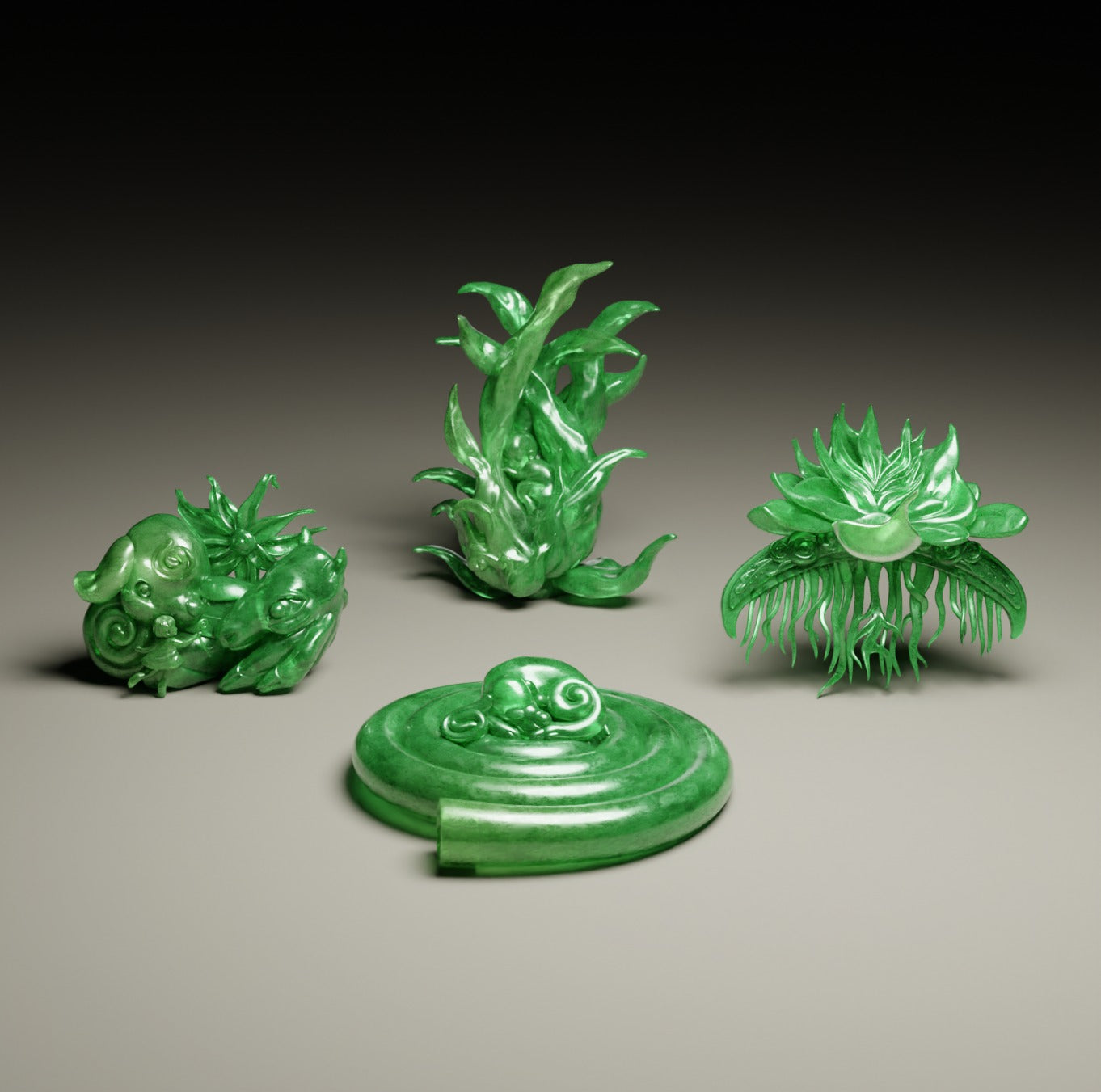
After Jade is Seneca's new sculptural series in cast glass and jade, exploring the tension between tradition, ancestry, and self-authorship. Ancient, precious, yet fragile materials are set against the possibility of reinvention, accompanied by digital paintings that create surreal yet grounded worlds, further encapsulating these tangible objects within narrative space. The sculptural series - made by the Asprey Studio Atelier - includes an elegant crown combining Eastern and Western influences, as well as motifs drawn from the artist’s personal narratives, alongside character-driven works that reflect her ever-growing, whimsical lexicon of creatures and symbols. Growing up in Shanghai and New York, through this new body of work, Seneca reimagines traditional Chinese ritual objects to propose a speculative space between cultural inheritance and personal myth-making.
After Jade: The Maternal Axis Crown
2026, Resin Glass Composite (jade available upon commission)
This work accompanies the 1/1 digital painting (print) titled After Jade: The Rabbit Sovereign (below)
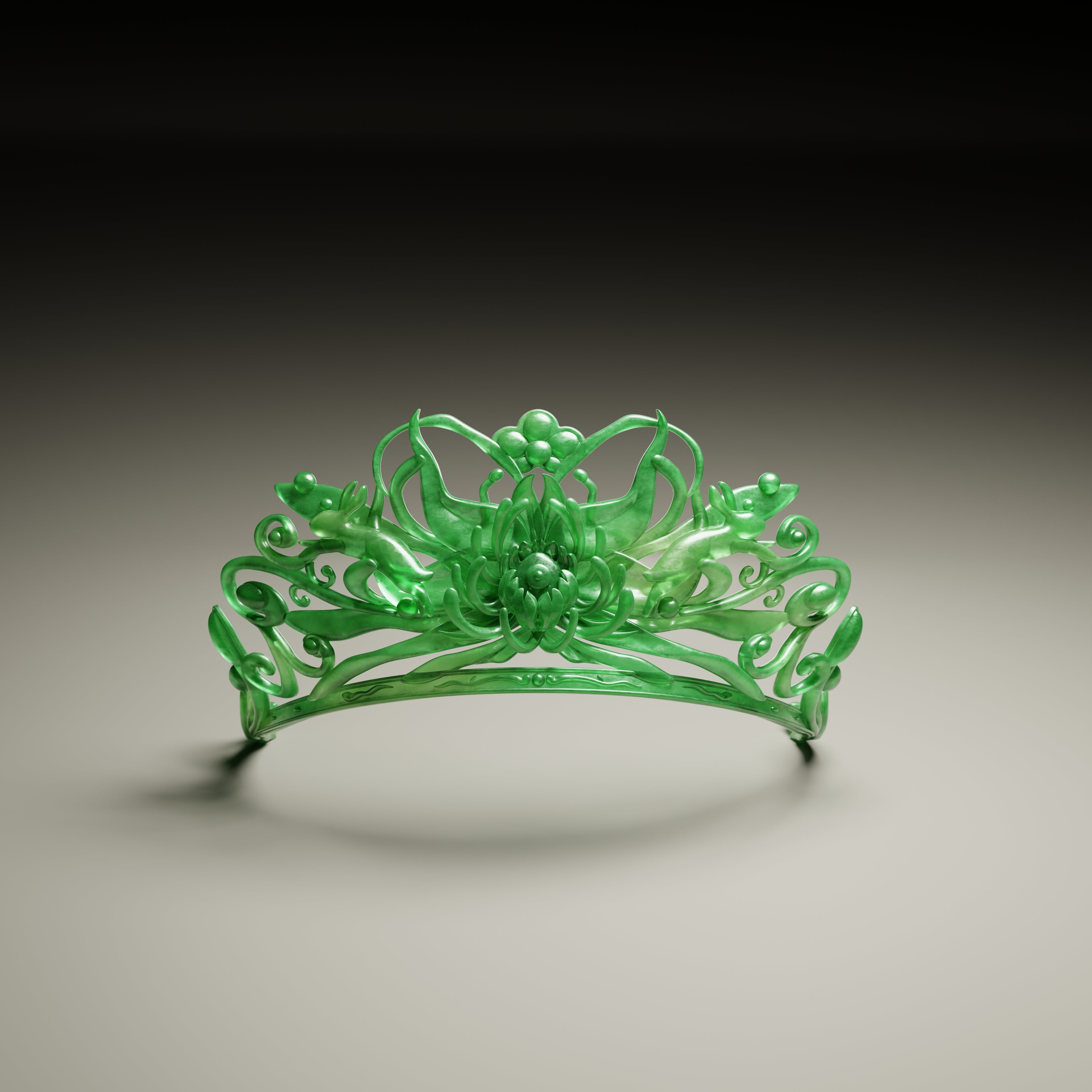
In The Maternal Axis Crown, Seneca continues her exploration of cultural inheritance and reinvention. Executed in cast glass yet conceived for jade carving, this sculpture serves as theanchor of the After Jade series.
The work reimagines the imperial crown, an object of ritual associated with lineage, hierarchy, and authority. Seneca creates a hybrid aesthetic that merges Chinese ornamental elements with Western sculptural sensibilities. The crown becomes both relic and reinterpretation, occupying a liminal space between historical artifact and contemporary sculpture.
Framing the composition are two mirrored rabbit silhouettes, an unexpected departure from the mythological guardians commonly found in traditional Chinese design. Where dragons or qilin might typically preside, Seneca replaces the emblem of power with a creature historically perceived as gentle and vulnerable. This substitution reframes the hierarchy of animal symbolism: the rabbit rises above as one of strength and endurance.
The motif carries a deeply personal resonance. The rabbits serve as an homage to the artist’s mother, born in the Year of the Rabbit, further alluding to the lineage of maternal strength that underpins the art series.
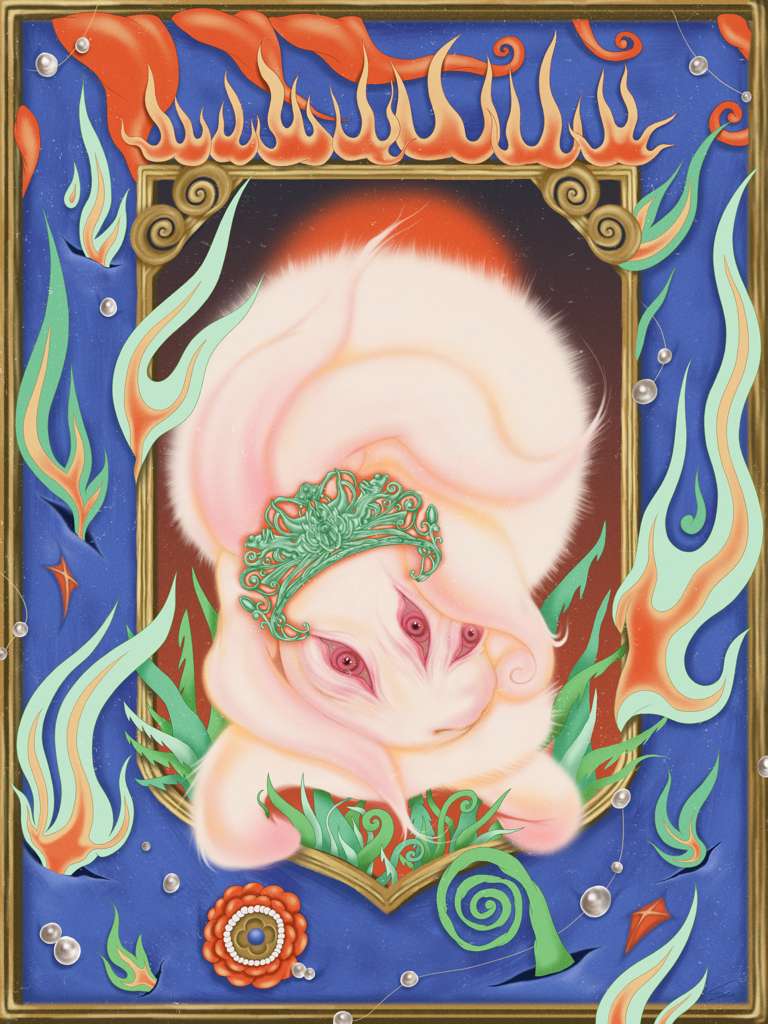
After Jade: The Rabbit Sovereign
2026, 1/1 Digital Painting (framed print)
This work accompanies After Jade: The Maternal Axis Crown (above)
The painting draws inspiration from traditional Chinese ornamental design as well as the decorative framing and structure of late Medieval and early Renaissance illuminated manuscripts, where narrative scenes are often enclosed within richly embellished borders filled with flowers, jewelry, and flourishes.
At the center of the composition rests a luminous three-eyed mythical rabbit adorning the Maternal Axis Crown literally within the piece. The animal assumes the role of sovereign, further enhancing its role in the series as one of endurance and poise. The rupture in the borders of burst flame continues to speak to both transformation and rebirth, letting a new power emerge. Paying homage to her mother, Seneca’s portrait of the creature continues to elevate the animal to a symbol of resilience, nurture, and lineage. A pillar of sovereignty
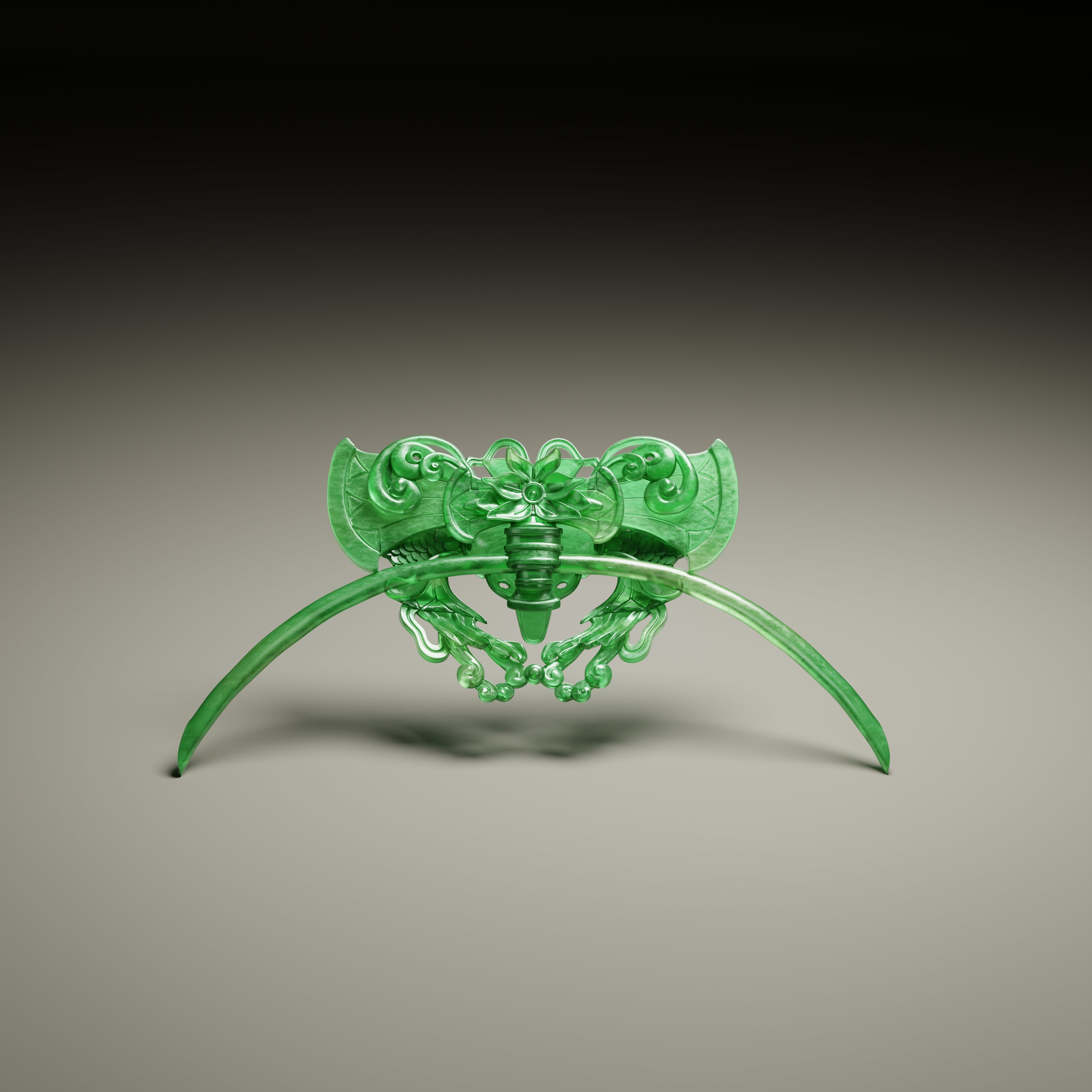
After Jade: PELVIC VESSEL
2026, Resin Glass Composite (jade available upon commission)
This work accompanies the 1/1 digital painting (print) titled After Jade: Goddess in Bloom (below)
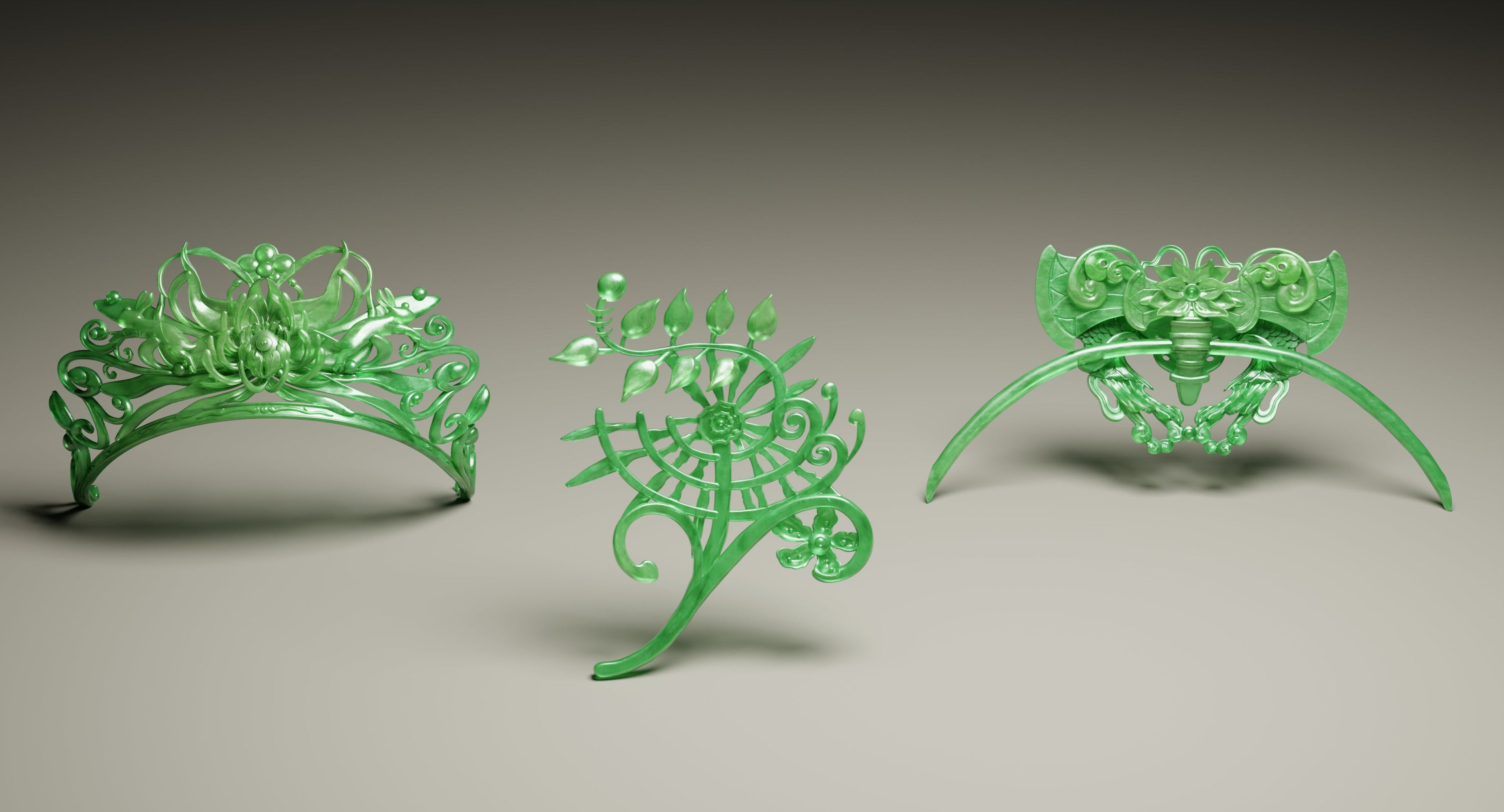
Cast in luminous glass that emulates the effervescence of jade, the sculpture reinterprets the traditional Chinese hairpin through a contemporary lens that evokes the symbolic architecture of the human body, aka. The pelvic bone.
Seneca imagines the pelvis becoming both the literal anatomic vessel and symbolic foundation through which generations pass, and a metaphorical axis from which tradition emerges. The matriarchal labor that underlies the continuity of culture - carried, quite literally, within the body.
While the glass sculpture maintains the delicacy and refinement of a classical jade carving, its structural language also details the design of armor. Curved plates, reinforced arcs, and symmetrical protrusions suggest protection and fortification, imbuing the work with an unexpected sense of strength. This duality showcases femininity as being both elegant and powerful.
Pelvic Vessel presents the female body not merely as a site of beauty or reproduction, but as an origin point from which cultural ancestry and tradition are carried forward.
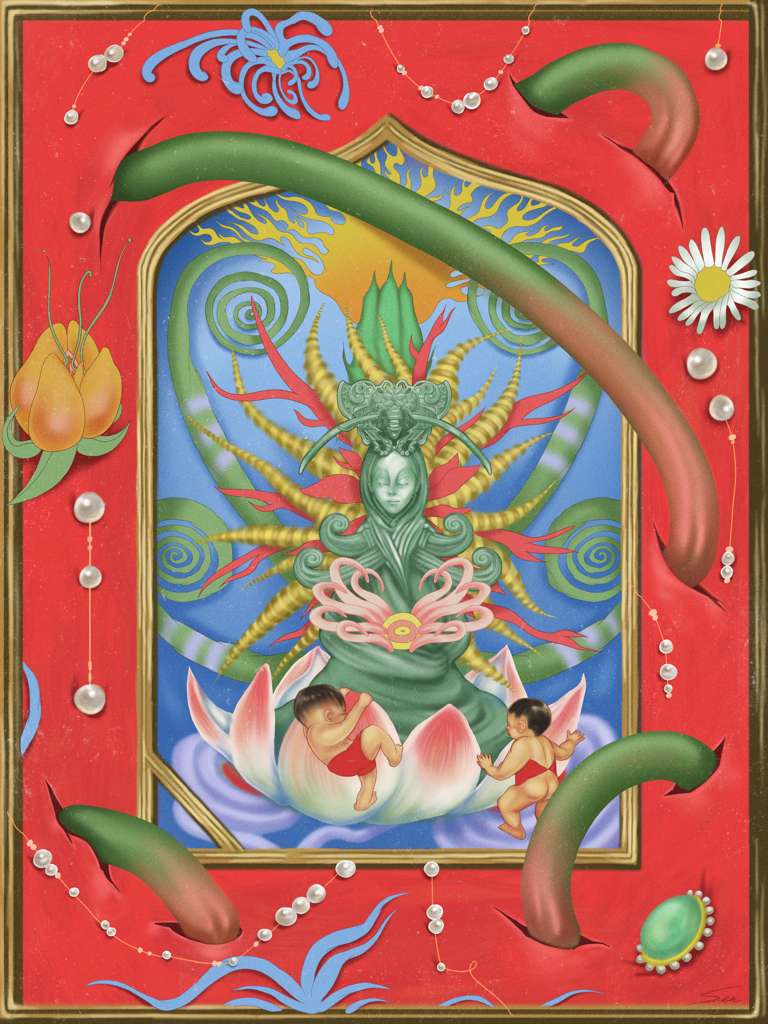
After Jade: Goddess in Rupture Bloom
2026, 1/1 Digital Painting (framed print)
This work accompanies After Jade: Pelvic Vessel (above)
In Goddess in Rupture Bloom, Seneca expands on the conceptual framework of her sculptural “Pelvic Vessel” in the same series After Jade. The jake-like cast glass hairpin appears within the composition adorned on the head of the central goddess figure, revelling the ornament as more of an emblem of ancestry and origin.
The composition draws inspiration from both traditional Chinese ornamental design and the flourished jeweled borders of the Late Medieval and early Renaissance illuminated manuscripts. The artist merges these two decorative systems to showcase her dialogue with tradition, identity, and heritage. Seated upon a blooming lotus, the goddess figure presides over two infants surrounded by abstract flora and pearls, suggesting the body and throne as sacred architecture and vessel of lineage. The rupture in the borders signals both transformation and rebirth, a breaking open of the past and letting a new inheritance emerge.
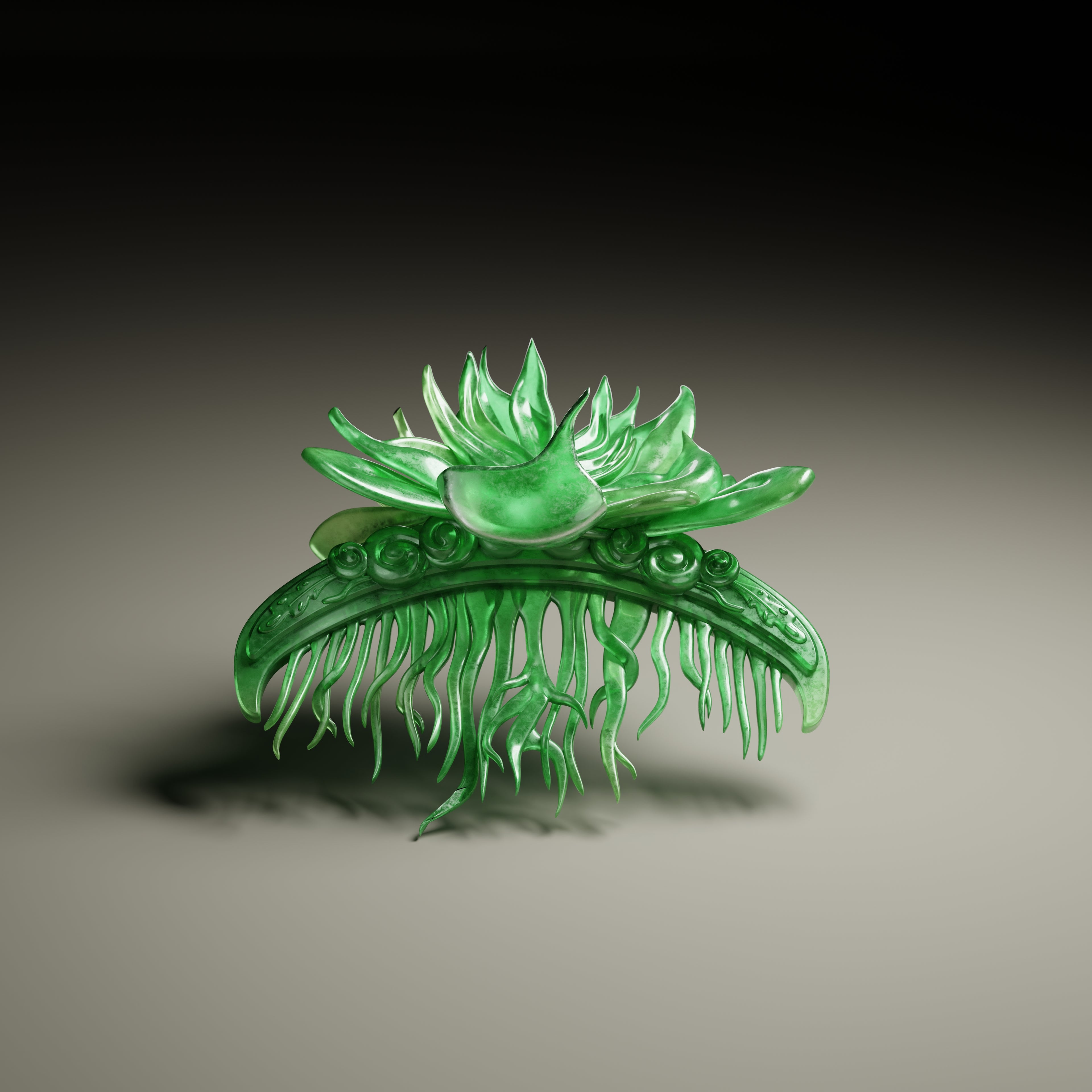
After Jade: Filial Bloom Comb
2026, Resin Glass Composite (jade available upon commission), Edition of 5
In After Jade: Filial Bloom Comb, Seneca reinterprets the traditional Chinese comb through the cast glass language of the series. The materiality of the art piece preserves the visual authority of the historical adornment while noticing the unique change - the comb’s teeth delicately gnarled into literal root forms. Beautiful, yet filled with abstract meaning. This deliberate disruption renders the object nonfunctional, shifting it from tool to metaphor.
The roots evoke lineage and ancestry, challenging the meaning and use of inherited traditions. Through this gesture, the work invites viewers to reconsider heritage not as something merely inherited or performed, but as something continuously shaped and renewed by each generation.
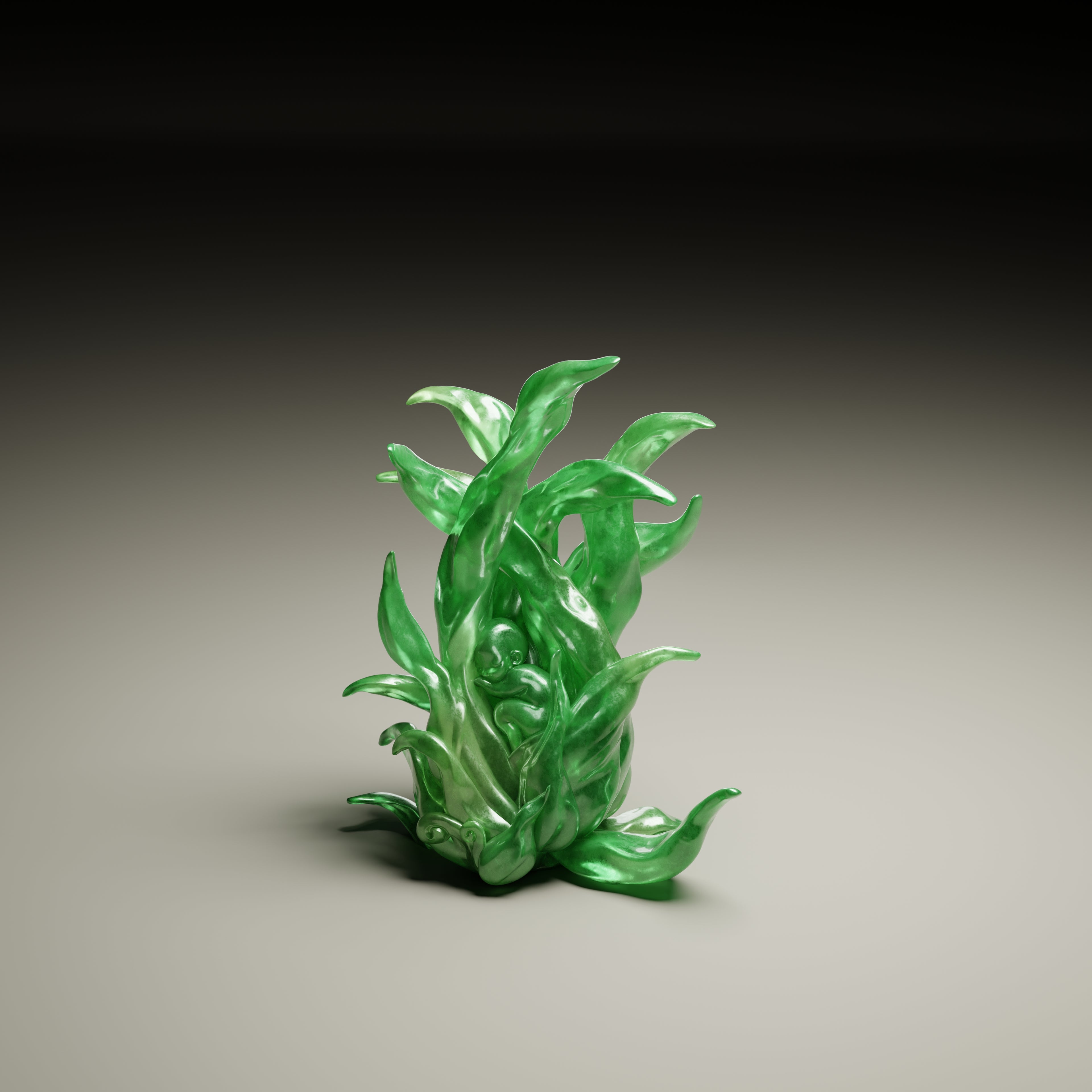
After Jade: WOMB FRUIT
2026, Resin Glass Composite (jade available upon commission)
In this cast glass sculpture, the artist reimagines the form of the Buddha’s Hand fruit into a symbolic cradle of origin and birth.
Enamored by beautiful jade carvings of the fruit from Qing Dynasty China, Seneca could only see the story within the shapes, seeking to create her own interpretation. The cast glass resembling jade recalls Chinese historical traditions while introducing a contemporary narrative element. A small infant nestled within the fruit’s curling segments showcases a new scene. The Buddha’s Hand fruit usually associated with fortune and blessing - here becomes a metaphor for protection and gestation. The sculpture aligns with the art series’ exploration of ancestry and cultural inheritance.
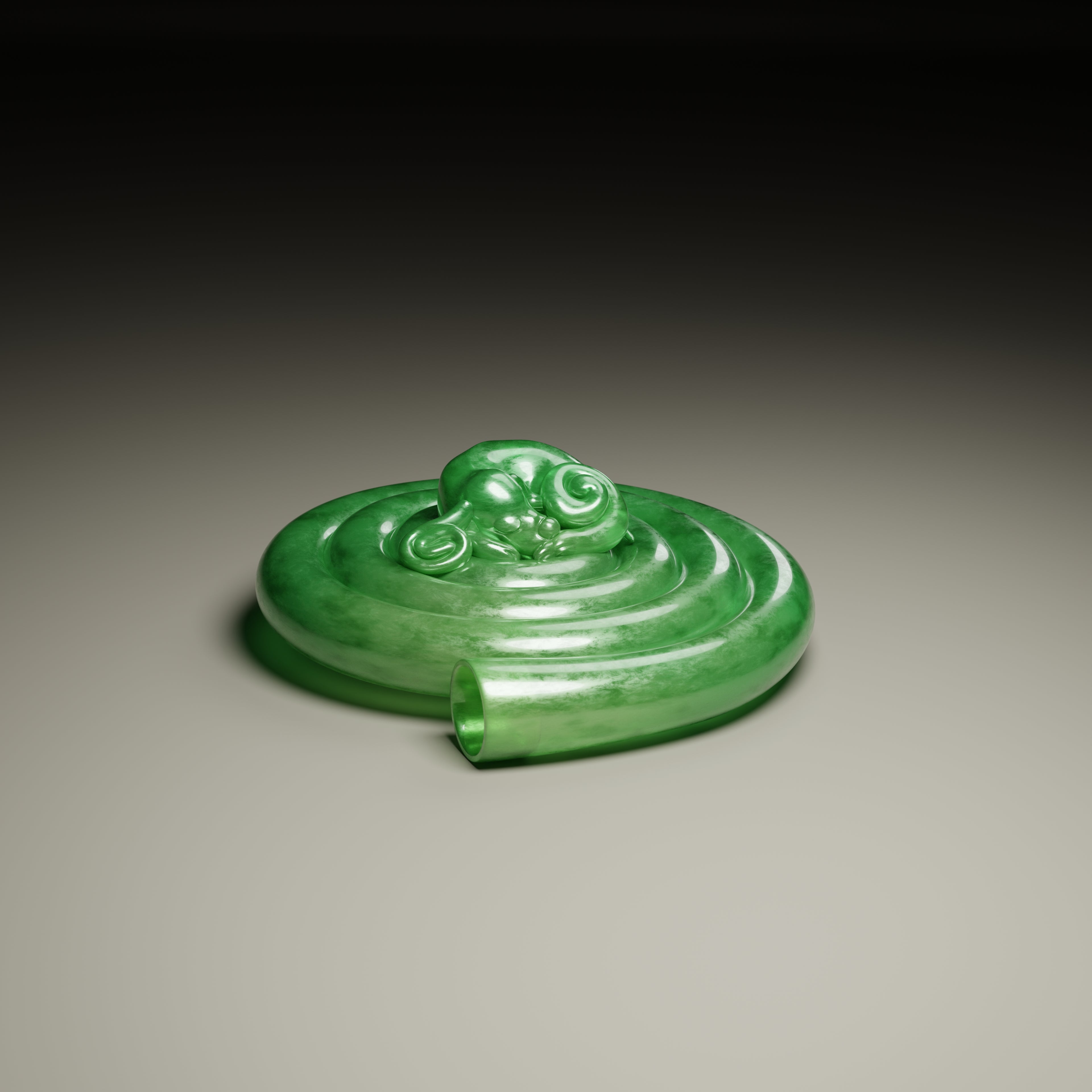
After Jade: SMALL GUARDIAN
2026, CAST GLASS
A small dog-like figure rests quietly at the center of a spiraling fern, its curled form camouflaging the guardian creature Shermicus.
Known in the artist’s narrative universe as the surreal three-eyed companion of the protagonist in the series Perils of Sese, the character appears here simplified and sleeping, blending into the organic structure that shelters it.
The spiral form echoes the abstract botanical language of the After Jade series while recalling motifs found in traditional jade carvings. The work connects personal mythology with historical material traditions, positioning the guardian as a quiet protector of lineage and imagination. Through a softened and newly stylized portrayal, the artist emphasizes tenderness and innocence within the sculpture. The piece reflects on inheritance not only through ancestry, but through myths and stories that quietly persist and evolve across generations.
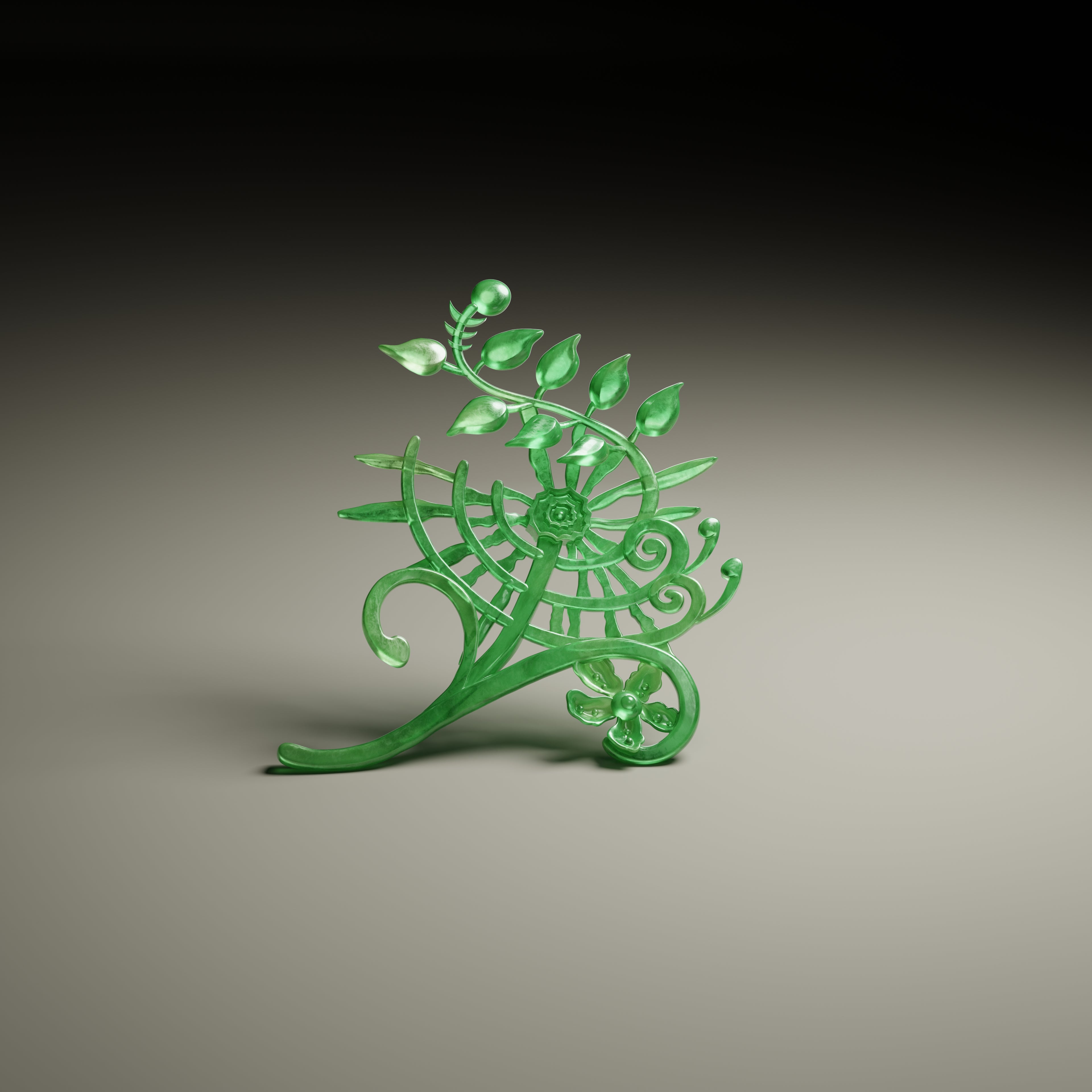
After Jade: Flower of Measured Intelligence and Lineage
2026, Resin Glass Composite (jade available upon commission)
Named the Flower of Measured Intelligence and Lineage, Seneca designs this art piece to be a nonfunctional men’s brooch. Structured like a compass yet unfolding as a flower, the form suggests knowledge that radiates outward while remaining anchored at a central point.
The sculptural is a standalone artifact, rather than a wearable ornament. It references the inherited role of men as visible guides within lineage and family structures. Its directional geometry frames responsibility as much as authority, positioning leadership as something measured and oriented rather than assumed. Within the After Jade series, the work reflects on familial framework while gently reinterpreting through a philosophical lens. The blossoming compass becomes a metaphor for pride, yet quiet reflection and balance carried across generations.
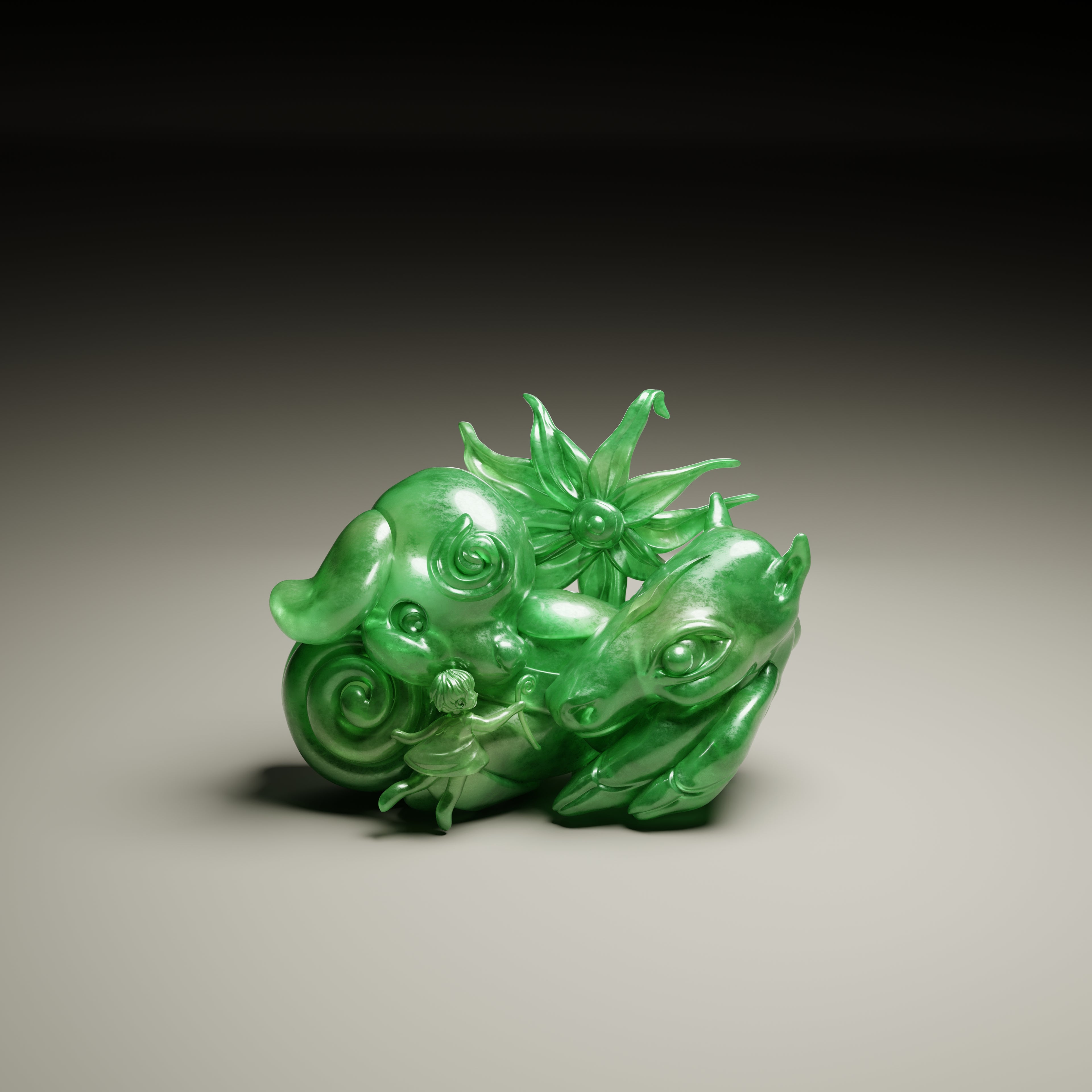
After Jade: SMALL HEIR
2026, Jade or Imperial Jadeide, Unique piece (1/1) - available upon commission
In After Jade: The Small Heir, Seneca brings the whimsical surreal narrative world of her ongoing story “Perils of Sese” into the sculptural language of her After Jade series.
Cast glass to emulate jade, the piece recalls the tradition of Chinese jade carvings in which animals gather protectively around a central figure. The artist references a specific carving called “Boy with Water Buffalo” from 19th century China compositionally and contextually.
In this case, the child, Sese, becomes the symbolic heir, representing the next generation inheriting new cultural memory and tradition. The story comes together with this series as a convergence of personal mythology and historical material language.
Get in touch
-
Enquiries
michela.cartot@asprey.com -
Follow us